
CASE STUDY — AN EVENT ENGAGEMENT SITE
NASA “Observe the Moon Night”
Rebuilding a global outreach program into a simple, joyful, and scalable participation experience.
My Role
Experience Architect, UX Lead, IA + Product Design (Sole Designer)
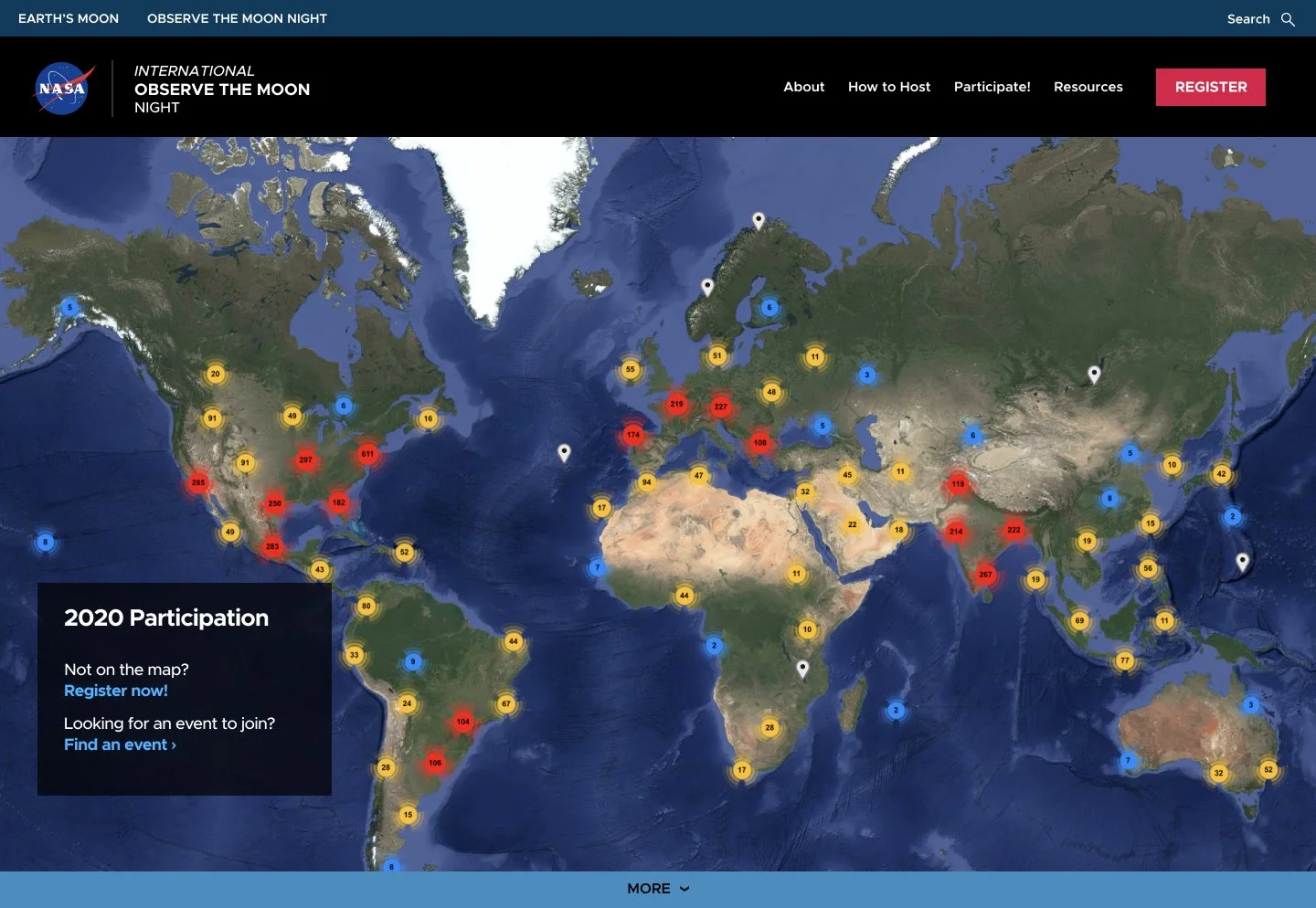
The home page built excitement with a live participation map, registration counts, and a countdown dashboard, reinforced by multiple entry points and a prominent red “Register” button.
The Challenge
Observe the Moon Night had years of excellent educational content, but it was buried. Navigation was unclear, participation steps were confusing, and mobile users struggled to engage during the actual event.
This wasn’t a visual refresh.
It required rebuilding the participation model.
The Opportunity
The project needed someone who could:
Clarify multiple participation paths
Make instructional content easy to act on
Reduce friction in long registration forms
Support mobile, real-time participation
Design systems that scaled year after year
This is where I do my best work: turning complexity into calm.
This is the kind of project I love: turning a sprawling, content-heavy experience into something elegant, navigable, and genuinely inviting.
Research & Key Insights
From conversations with educators, organizers, and participants:
Users wanted to know “what to do tonight”
Different cohorts needed different guidance
Long forms discouraged completion
Mobile participation was critical
Sharing participation increased engagement
These insights drove the IA, registration flows, and interactive features.
Once we clarified the goals, extensive audits of existing content and resources were completed to better classify and organize for the new site structure.
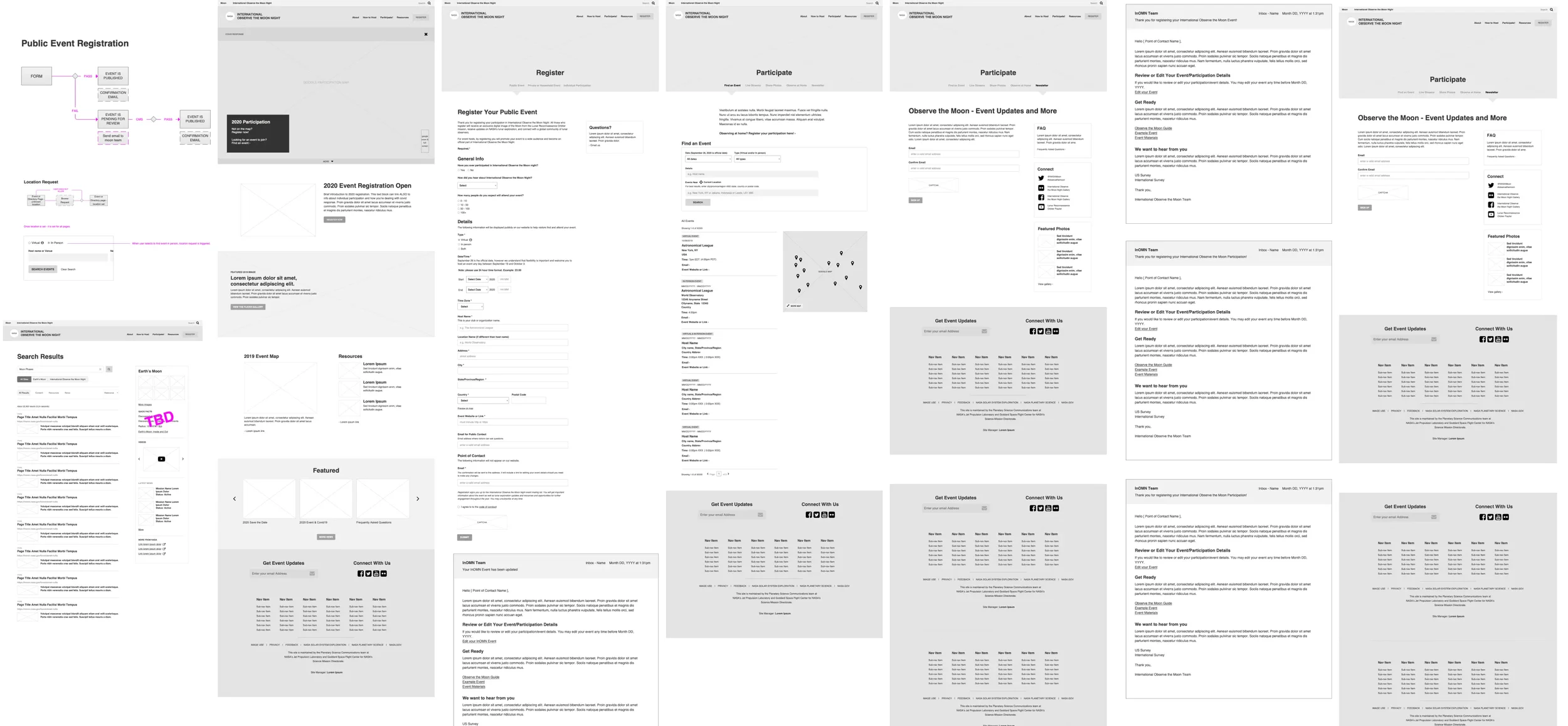
Three distinct pathways to participation were architected and forms were broken into sections to make them easier to digest.
The Solution
A welcoming, structured participation ecosystem designed for clarity, trust, and global engagement.
Key elements:
-
Observe the Moon Night lived within a larger NASA property. I designed a site selector above the main navigation to clarify context, improve orientation, and support smart interlinking between Moon content and the parent site.
-
Tailored flows and forms guided:
Public event planners
Private hosts
Individual observers
Each received only the instructions relevant to them.
-
Pages like “How to Host” were transformed into step-based, skimmable guides that reduced overwhelm and increased follow-through.
-
Public event registration required a substantial amount of information. Working closely with the Moon team, I reorganized long forms into clear sections, removed unnecessary required fields, and reduced friction, turning form completion into a smooth, natural part of participation.
-
Public event organizers received an obfuscated edit link back to their submission, allowing them to update their event without needing an account. Elegant, secure, and low-friction.
-
I architected a profanity filter and moderation workflow to help managers quickly review and filter inappropriate submissions, keeping community participation safe and mission-aligned.
-
We developed a mobile-friendly interactive Moon map, embedded seamlessly into the site, showcasing key features users could view on the night of the event.
-
Multiple touchpoints in the experience encouraged users to opt into ongoing communication, helping the team grow their newsletter list to 16,000+ subscribers.
-
Because many participants joined from their phones —sometimes literally outside under the night sky — mobile clarity was prioritized across all flows.
On mobile, the register CTA was layered over the map to keep participation front and center, with event discovery surfaced as a primary action.
A mobile-friendly interactive Moon map, embedded seamlessly into the site, showcased key features users could view on the night of the event.
We also built a cross-device certificate tool that let participants personalize and download NASA-designed certificates.
Collaboration
I partnered closely with:
NASA outreach and education teams
Program leadership
Developers and Internal partners coordinating releases
Impact
Participation doubled in the first year
Global reach expanded significantly
Registration completion improved
Newsletter audience surpassed 16,000 subscribers
Interactive features increased engagement and repeat participation
I work on Astronomy Outreach and Education. Programs like these help people like me plan events and communicate science.
Thanks a lot for motivating us!
Quote from 2025 participant who enjoyed the celebration in Brazil.
Links
The original Observe the Moon Night site has since been merged into NASA’s unified science platform as part of a broader consolidation of public outreach content.